
การนำเงิน และสิ่งของเข้าหรือออกประเทศไทย
บุคคลธรรมดา / นักท่องเที่ยว สามารถนำเงินตราไทย เงินตราต่างประเทศหรือปัจจัยการชำระเงินตราต่างประเทศเข้ามาหรือออกไปนอกราชอาณาจักรไทยได้ตามมูลค่าที่กฎหมายกำหนด โดยไม่ต้องขออนุญาตจากธนาคารแห่งประเทศไทย ดังนี้
⬩➤ เงินบาท (THB) เข้า-ออกไทย
นำเงิน “บาท” เข้าไทย
ได้ไม่จำกัดจำนวน
นำเงิน “บาท” ออกไปยัง…
ประเทศเมียนมา ลาว กัมพูชา มาเลเซีย เวียดนาม และ จีน(เฉพาะมณฑลยูนนาน เมืองที่รู้จักกัน เช่น คุนหมิง)
- เกิน 450,000 บาท ต้องสำแดงต่อเจ้าหน้าที่ศุลกากรตามแบบที่กำหนด
- เกิน 2,000,000 บาท ต้องขออนุญาตธนาคารแห่งประเทศไทย
นำเงิน “บาท” ออกไปยังประเทศอื่นๆ
(ยกเว้นตามข้อ2.)
- ไม่เกิน 50,000 บาท ไม่ต้องแจ้ง ไม่ต้องขออนุญาต
- เกิน 50,000 บาท ต้องขออนุญาตธนาคารแห่งประเทศไทย
⬩➤ เงินตราต่างประเทศ เข้า-ออกไทย
นำเงิน “ทุกสกุล” เข้าและออกไทย
ได้ไม่จำกัดจำนวน
นำเงิน “ทุกสกุล” เข้าหรือออก เกิน 15,000 ดอลลาร์สหรัฐ หรือเทียบเท่า
ต้องกรอกแบบสำแดงเงินตราต่อพนักงานเจ้าหน้าที่ศุลกากรในขณะที่ผ่านด่านศุลกากรตามแบบที่กำหนด
การผ่านด่านศุลกากร
ทุกคนที่เข้าไทย หลังจากผ่านด่านตรวจคนเข้าเมือง(ตม.)แล้ว จะต้องผ่านศุลกากร ที่มีช่องแดง (มีของต้องสำแดง) หรือ ช่องเขียว (ไม่ต้องสำแดง)
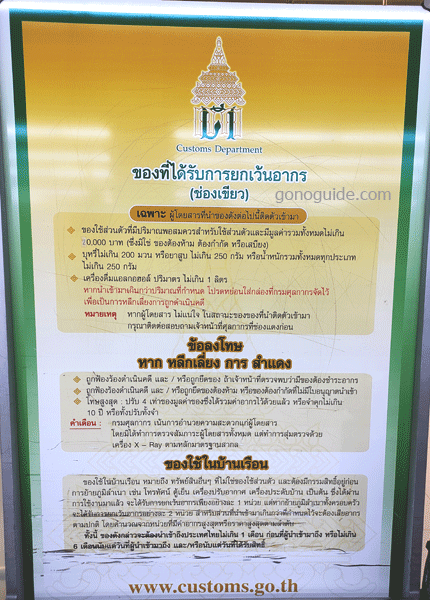
⬩➤ สิ่งของที่ได้รับการยกเว้นอากร (ผ่านช่องเขียว)
- ของใช้ส่วนตัว ที่มีปริมาณพอสมควร สำหรับใช้ส่วนตัว และมีมูลค่ารวมทั้งหมดไม่เกิน 20,000 บาท (ซึ่งมิใช่ ของต้องห้าม ของต้องกำกัด หรือเสบียง)
- บุหรี่ ไม่เกิน 200 มวน หรือยาสูบ ไม่เกิน 250 กรัม หรือน้ำหนักรวมทั้งหมดทุกประเภท ไม่เกิน 250 กรัม
- เครื่องดื่มแอลกอฮอล์ ปริมาตร ไม่เกิน 1 ลิตร
หากนำเข้ามาเกินกว่าปริมาณที่กำหนด โปรดหย่อนใส่กล่องที่กรมศุลกากรจัดไว้ เพื่อเป็นการหลีกเลี่ยงการถูกดำเนินคดี
หากผู้โดยสารไม่แน่ใจ ในสถานะของของที่นำติดตัวเข้ามา กรุณาติดต่อสอบถามเจ้าหน้าทีศุลกากรที่ช่องแดงก่อน
คำอธิบาย ขยายความ
⬩➤ 1. ของใช้ส่วนตัว
ของใช้ส่วนตัว หมายถึง ของส่วนตัวที่เจ้าของนำเข้ามาพร้อมกับตนสำหรับใช้เอง หรือใช้ในวิชาชีพ
- ตัวอย่างเช่น เสื้อผ้า หนังสือ มีจำนวนพอสมควรแก่ฐานะ เว้นแต่รถยนต์ อาวุธปืน และกระสุนปืน และ เสบียง
- แต่สุรา บุหรี่ ซิการ์ หรือยาเส้น ซึ่งเป็นของส่วนตัวที่ผู้เดินทางนำเข้ามาพร้อมกับตนนั้น อธิบดีกรมศุลกากรอาจออกข้อกำหนดยกเว้นอากรให้ แต่ต้องไม่เกินปริมาณดังนี้
- บุหรี่ 200 มวน หรือซิการ์ หรือยาเส้นอย่างละ 250 กรัม หรือหลายชนิดรวมกัน มีน้ำหนักทั้งหมด 250 กรัม (แต่ บุหรี่ต้องไม่เกิน 200 มวน)
- สุรา 1 ลิตร
⬩➤ 2. ของใช้ในบ้านเรือน
ของใช้ในบ้านเรือน หมายถึง
ทรัพย์สินอื่น ๆ ที่ไม่ใช่ของใช้ส่วนตัว ซึ่งผู้เดินทางเข้ามาในหรือออกไปนอกราชอาณาจักร นำติดตัวเข้ามาในหรือออกไปพร้อมกับตน และเป็นของที่ผู้นำเข้าใช้สอยตามปกติระหว่างอยู่ต่างประเทศ
(แปลง่ายๆคือ ของที่เราไม่ได้นำติดตัวตอนออกไปต่างประเทศ เพราะมันไม่ใช่ของใช้ที่จะนำไปเที่ยว)
เช่น คนที่ย้ายจากต่างประเทศ มาอยู่ไทย
โดยผู้นำเข้าของใช้ในบ้านเรือน ต้องมีกรรมสิทธิ์ในของนั้นๆ อยู่ก่อนการย้ายภูมิลำเนา เช่น โทรทัศน์ ตู้เย็น เครื่องปรับอากาศ เครื่องประดับบ้าน ฯลฯ
ของใช้ในบ้านเรือน ที่ใช้แล้วดังกล่าว เจ้าของต้องนำเข้ามาพร้อมกับตน เนื่องจากในการย้ายภูมิลำเนา และมีจำนวนพอสมควรแก่ฐานะ จะได้รับสิทธิยกเว้นอากร (เข้าใจว่า จนท.เป็นคนพิจารณาเองว่าสมควรแก่ฐานะมั้ย)
ของใช้ในบ้านเรือน ซึ่งได้ผ่านการใช้งานมาแล้ว
จะได้รับการยกเว้นอากรเพียงอย่างละ 1 หน่วย แต่หากย้ายภูมิลำเนาทั้งครอบครัว จะได้รับการยกเว้นอากรอย่างละ 2 หน่วย
สำหรับส่วนที่นำเข้ามาเกินกว่าที่กำหนดไว้ จะต้องเสียอากรตามปกติ โดยคำนวนจากหน่วยที่มีค่าอากรสูงสุด หรือราคาสูงสุดตามลำดับ
ทั้งนี้ ของดังกล่าวจะต้องเป็นของที่นำเข้ามาจากประเทศซึ่งตนมีภูมิลำเนาอยู่ก่อนที่จะย้ายเข้ามามีภูมิลำเนาในประเทศไทย
และนำเข้าถึงไทยไม่เกิน 1 เดือน ก่อนที่ผู้นำเข้ามาถึง หรือไม่เกิน 6 เดือนนับแต่วันที่ผู้นำเข้ามาถึง และ/หรือ นับแต่วันที่ได้รับสิทธิ์
เอกสารที่ใช้ในการผ่านพิธีการ ▼
- หนังสือเดินทาง
- ใบตราส่ง (B/L, AWB) และใบสั่งปล่อย (D/O)
- รายการที่นำของเข้า
- บัตรประชาชน (กรณีเป็นคนไทย)
- หลักฐานอื่นเพิ่มเติมแล้วแต่กรณี
- หลักฐานการย้ายภูมิลำเนา
หลักเกณฑ์ในการย้ายภูมิลำเนา ▼
ผู้ที่จะได้รับการยกเว้นอากรเนื่องในการย้ายภูมิลำเนาจะต้องมีคุณสมบัติดังต่อไปนี้
1. ชาวต่างประเทศ
- เป็นผู้ที่ได้รับโควตาเข้าเมืองตามที่ปรากฏในหนังสือเดินทางหรือในใบประจำตัวคนต่างด้าว หรือเป็นผู้ที่เข้ามาในประเทศไทยในฐานะผู้เชี่ยวชาญ ผู้ชำนาญการพิเศษ หรือภายใต้สัญญาจ้างของส่วนราชการและมีหนังสือของส่วนราชการนั้น ๆ รับรองว่าได้รับอนุญาตจากสำนักงานตรวจคนเข้าเมือง ให้อยู่ในประเทศไทยในประเภท Non-Immigrant แล้ว และจะอยู่ปฏิบัติงานไม่น้อยกว่า 1 ปี หรือเป็นผู้ที่ได้รับอนุญาตให้เข้ามาประกอบอาชีพในประเทศและได้รับอนุญาตจากสำนักงานตรวจคนเข้าเมือง ให้อยู่ในประเทศได้ไม่น้อยกว่า 1 ปี
- หนังสือสำนักงานตรวจคนเข้าเมืองรับรองว่าจะได้รับอนุญาตให้อยู่ในประเทศชั่วคราวเป็นปี ๆ ไป
- หนังสืออนุญาตของกรมการจัดหางานรับรองว่าได้รับอนุญาตให้ประกอบอาชีพในประเทศไทย ไม่น้อยกว่า 1 ปี กรณีชาวต่างประเทศตาม 1.2 และ 1.3 มีสามีหรือภริยาของตนติดตามมาด้วย และได้รับอนุญาตจากสำนักงานตรวจคนเข้าเมือง ให้อยู่ในประเทศไทยได้ครั้งแรก 90 วัน ให้ถือว่าผู้ติดตามนั้นได้ย้ายภูมิลำเนาเข้ามาอยู่ในประเทศด้วย [ชาวต่างประเทศที่เข้ามาใช้ชีวิตบั้นปลายในฐานะผู้สูงอายุในประเทศไทย (วีซ่าประเภท Non-immigrant รหัส “O”) ไม่ได้รับสิทธิ์ยกเว้นอากร]
2. คนไทยหรือข้าราชการไทย
- ที่ไปทำงานหรือศึกษาหรือดำรงตำแหน่งในต่างประเทศ
***ติดต่อรับของ ณ สำนักงาน/ด่านศุลกากรที่นำของเข้า หรือสอบถามข้อมูลสายด่วนศุลกากร โทร.1164***
อ่านรายละเอียด ของใช้ในบ้านเรือนที่เว็บกรมศุลกากร
⬩➤ 3. ของต้องห้าม
ของต้องห้าม หมายถึง
ของที่มีกฎหมายกำหนด ห้ามนำเข้ามา หรือส่งออกไปนอกราชอาณาจักรโดยเด็ดขาด
และในบางกรณี ห้ามการส่งผ่านด้วย ผู้ใดนำสินค้าต้องห้ามเข้ามา หรือส่งออกไปนอกราชอาณาจักร จะมีความผิดต้องรับโทษตามกฎหมายที่เกี่ยวข้อง และเป็นความผิดตามมาตรา 244 และ มาตรา 246 แห่งพระราชบัญญัติศุลกากร พ.ศ. 2560 ด้วย
ตัวอย่างสินค้าต้องห้ามในการนำเข้า-ส่งออก มีดังนี้
- วัตถุลามก การนำเข้า และส่งออกวัตถุลามก ไม่ว่าจะอยู่ในรูปแบบหนังสือ ภาพเขียน ภาพพิมพ์ ภาพระบายสี สิ่งที่พิมพ์ขึ้น รูปภาพ ภาพโฆษณา เครื่องหมาย รูปถ่าย และภาพยนตร์ลามกหรือวัตถุลามกอื่น ๆ
- สินค้าที่มีตราหรือลวดลายเป็นรูปธงชาติ
- ยาเสพติดให้โทษ
- เงินตรา พันธบัตร ใบสำคัญรับดอกเบี้ยพันธบัตรอันเป็นของปลอมหรือแปลง เหรียญกษาปณ์ที่ทำให้น้ำหนักลดลงโดยทุจริต ดวงตราแผ่นดิน รอยตราแผ่นดินหรือพระปรมาภิไธย ดวงตราหรือรอยตราของทางราชการอันเป็นของปลอม
- สินค้าละเมิดลิขสิทธิ์ เช่น แถบบันทึกเสียง (เทปเพลง) แผ่นบันทึกเสียง (คอมแพคดิสก์) แถบบันทึกภาพ (วีดีโอเทป) โปรแกรม คอมพิวเตอร์ หนังสือ หรือสินค้าอื่นใดที่ทำซ้ำหรือดัดแปลงงานอันมีลิขสิทธิ์ของผู้อื่น
- สินค้าปลอมแปลงหรือเลียนแบบเครื่องหมายการค้า
⬩➤ 4. ของต้องกำกัด
(บอกก่อนว่า ของต้องกำกัด ไม่ได้เขียนผิดนะ)
ของต้องกำกัด หมายถึง
สินค้าที่มีกฎหมายกำหนดว่าหากจะมีการนำเข้า-ส่งออก หรือผ่านราชอาณาจักร จะต้องได้รับอนุญาต หรือปฏิบัติให้ครบถ้วนตามที่กำหนดไว้ในกฎหมายนั้นๆ
เช่น ต้องมีใบอนุญาตการนำเข้าและส่งออก ต้องปฏิบัติตามประกาศอันเกี่ยวกับฉลาก หรือใบรับรองการวิเคราะห์ หรือเอกสารกำกับยา เป็นต้น
ผู้ใดนำของต้องกำกัดเข้ามา หรือส่งออก หรือส่งผ่านราชอาณาจักร โดยมิได้รับอนุญาต หรือไม่ปฏิบัติตามกฎหมายที่กำหนดไว้ให้ครบถ้วน
จะมีความผิดตามที่กำหนดไว้ในกฎหมายนั้นๆ และเป็นความผิดตามมาตรา 244 และ มาตรา 246 แห่งพระราชบัญญัติศุลกากร พ.ศ. 2560 ด้วย
ตัวอย่างสินค้าที่มีมาตรการนำเข้า, สินค้าที่มีมาตรการส่งออก, สินค้ามาตรฐาน และมาตรฐานสินค้า
⬩➤ 5. ข้อลงโทษ หากหลีกเลี่ยงการสำแดง
ข้อลงโทษ หากหลีกเลี่ยงการสำแดง
- ถูกฟ้องร้องดำเนินคดี และ/หรือ ถูกยึดของ ถ้าเจ้าหน้าที่ตรวจพบว่ามีของต้องชำระอากร
- ถูกฟ้องร้องดำเนินคดี และ/หรือถูกจึดของต้องห้าม หรือของต้องกำกัดที่ไม่มีใบอนุญาตนำเข้า
- โทษสูงสุด ปรับ 4 เท่าของมูลค่าของ ซึ่งได้รวมค่าอากรไว้ด้วยแล้ว หรือ จำคุกไม่เกิด 10 ปี หรือ ทั้งจำทั้งปรับ
คำเตือน : กรมศุลกากร เน้นการอำนวยความสะดวกแก่ผู้โดยสาร โดยมิได้ทำการตรวจสัมภาระผู้โดยสารทั้งหมด แต่ทำการสุ่มตรวจด้วยเครื่อง X-Ray ตามหลักมาตรฐานสากล
Bringing Cash and Items Into or Out of Thailand
You can bring Thai Baht or foreign currency into or out of Thailand without prior permission from the Bank of Thailand, provided the amounts fall within the official legal limits outlined below.
⬩➤ Thai Baht (THB)
Bringing Thai Baht INTO Thailand:
- No Limit: You can bring any amount into the country.
Taking Thai Baht OUT of Thailand:
- Neighboring Countries & Yunnan, China(Myanmar, Laos, Cambodia, Malaysia, Vietnam, and China’s Yunnan Province):
- Up to 450,000 THB: No declaration required.
- 450,001 – 2,000,000 THB: Must declare to Customs officers at the checkpoint using the prescribed form.
- Over 2,000,000 THB: Requires prior permission from the Bank of Thailand.
- All Other Countries:
- Up to 50,000 THB: No declaration or permit needed.
- Over 50,000 THB: Requires prior permission from the Bank of Thailand.
⬩➤ Foreign Currency (All Currencies Combined)
Bringing Foreign Currency INTO or OUT of Thailand:
- No Limit: You can bring any amount in or out.
- Customs Declaration: If the total value of all foreign currencies combined exceeds $15,000 USD (or equivalent), you must declare it to Customs officers at the airport or border checkpoint.
Going Through Customs in Thailand
After passing through Immigration (TM), all travelers entering Thailand must pass through Customs. You must choose either the Green Channel (Nothing to Declare) or the Red Channel (Goods to Declare).
⬩➤ Duty-Free Allowances (Green Channel)
You can walk through the Green Channel if you are bringing in only allowable duty-free items:
- Personal Effects: Personal items in reasonable quantities for personal use, with a total value not exceeding 20,000 Baht (excluding prohibited or restricted goods, or commercial inventory).
- Tobacco / Cigarettes:
- Maximum 200 cigarettes, OR
- Maximum 250 grams of tobacco, OR
- A total combined weight of all tobacco products not exceeding 250 grams.
- Alcoholic Beverages: Maximum 1 liter total.
Important Reminders & Warnings
- Exceeding Limits: If you bring tobacco or alcohol exceeding the allowed limits, you must drop the excess amount into the designated drop boxes provided by the Customs Department to avoid prosecution and fines.
- If Unsure: If you are uncertain whether your items need to be declared, please consult a Customs officer at the Red Channel before passing through.
Detailed Rules: Personal Effects vs. Household Effects
⬩➤ 1. Personal Effects
Personal effects refer to personal items brought in by the traveler for personal or professional use.
- Examples: Items such as clothes and books, in reasonable quantities suitable for one’s status.
- Exclusions: Vehicles, firearms, ammunition, and commercial supplies/provisions.
- Duty-Free Exemptions for Spirits & Tobacco:
- Cigarettes / Tobacco: Up to 200 cigarettes, OR 250 grams of cigars or tobacco, OR a combined weight of 250 grams across multiple types (cigarettes must not exceed 200 total).
- Spirits / Alcohol: Up to 1 liter.
⬩➤ 2. Household Effects
Household effects refer to other non-personal assets that a traveler brings into or out of the country, which were normally used while living abroad (simply put, items not brought along when leaving the country because they are not travel essentials, such as when relocating to Thailand).
Ownership & Usage Requirements:
- The importer must have owned and used the items prior to relocating.
- Examples: Televisions, refrigerators, air conditioners, home decorations, etc.
- These used household items must be brought in by the owner due to relocation and in reasonable quantities suitable for their status to qualify for duty exemption (determined at the discretion of Customs officers).
Allowances for Used Household Items:
- Individual Relocation: 1 unit per category is exempt from duty.
- Family Relocation: 2 units per category are exempt from duty.
- Excess Units: Any items exceeding the allowance will be subject to standard import duties, calculated starting from the unit with the highest duty rate or highest value, respectively.
Import Timeline:
- Additionally, these items must be imported from the country where you lived before moving your residence to Thailand.
- The items must arrive in Thailand no earlier than 1 month before your arrival, or no later than 6 months after your arrival date and/or the date your exemption status is granted.
Required Documents for Clearance ▼
- Passport
- Bill of Lading (B/L) or Air Waybill (AWB), and Delivery Order (D/O)
- Import Entry Declaration Form
- Thai National ID Card (for Thai nationals)
- Proof of Relocation
- Additional supporting documents (depending on the case)
Eligibility Criteria for Relocation Duty Exemptions ▼
To qualify for tax and duty exemptions when moving your residence to Thailand, you must meet one of the following criteria:
1. Foreign Nationals
- Granted an immigration quota as shown in your passport or Alien Residence Certificate; OR
- Entering Thailand as an expert/specialist or under a government contract, accompanied by a government letter certifying approval from the Immigration Bureau to stay under a Non-Immigrant visa for at least 1 year; OR
- Authorized to work in Thailand with permission from the Immigration Bureau to stay for at least 1 year.
- Urgent Cases: If official immigration approval is still pending, you must submit either an Immigration Bureau letter confirming approval for a year-to-year extension OR a Department of Employment permit certifying authorization to work for at least 1 year.
- Dependents: Spouses of foreign nationals under the expert or work categories who enter with a 90-day initial Non-Immigrant visa are also considered eligible relocators.
- (Note: Foreigners retiring in Thailand on a Non-Immigrant “O” visa are NOT eligible for duty exemptions.)
2. Thai Nationals & Government Officials
- Must have resided abroad continuously for at least 1 year.
- If returning before completing 1 year, you must provide official proof showing that your return is due to contract termination, graduation, or an official transfer order back to Thailand.
To collect your items, contact the Customs Office/Port of entry, or call the Customs Hotline at 1164.
⬩➤ 3. Prohibited Goods
Prohibited goods are items strictly forbidden by law from being imported into, exported out of, or transit through Thailand. Importing or exporting prohibited goods is an offense punishable by relevant law, as well as Sections 244 and 246 of the Customs Act, B.E. 2560 (2017).
Examples of Prohibited Goods:
- Obscene Materials: Books, drawings, prints, paintings, published materials, pictures, advertisements, symbols, photographs, pornographic films, or any other obscene objects.
- National Flag Items: Goods depicting or bearing the pattern of the Thai national flag.
- Narcotics: Illegal drugs and controlled substances.
- Counterfeit Items & Currency: Counterfeit or altered currency, bonds, bond interest coupons, fraudulently shaved coins, as well as counterfeit official seals, royal seals, or royal signatures.
- Copyright Infringing Goods: Tapes, CDs, video tapes, computer software, books, or any other items that pirate or adapt copyrighted works.
- Trademark Infringing Goods: Counterfeit or imitation trademark products.
⬩➤ 4. Restricted Goods
Restricted goods are items where import, export, or transit through the Kingdom is restricted by law and requires prior permission or full compliance with specific statutory requirements.
- Requirements: May include import/export permits, compliance with labeling regulations, certificates of analysis, or medical package inserts.
- Legal Penalty: Importing, exporting, or transiting restricted goods without a permit or failing to comply with the law is an offense under the specific governing acts, as well as Sections 244 and 246 of the Customs Act, B.E. 2560 (2017).
- Examples: Goods subject to specific import/export control measures, standardized goods, and certified quality standard items.
⬩➤ 5. Penalties for Evading Customs Declarations
- Dutiable Items: If officers discover undeclared items subject to duty, you face prosecution and/or confiscation of the goods.
- Prohibited / Restricted Items: Bringing prohibited goods or restricted goods without a valid permit results in legal prosecution and/or confiscation of the items.
- Maximum Penalties: A fine of up to 4 times the value of the goods (including duty), or imprisonment for up to 10 years, or both.
Warning: Thai Customs prioritizes passenger convenience and does not search all baggage. However, random X-ray inspections are conducted in accordance with international standards.
ข้อมูลจาก สำนักงานศุลกากรท่าอากาศยานดอนเมือง , ศูนย์บริการศุลกากร, ศูนย์บริการศุลกากร, สถานเอกอัครราชทูต ณ กรุงลอนดอน