
❰ วีซ่าไทย (Thai Visa) ❰ ต่างชาติอยู่ไทยควรรู้ (Documents)
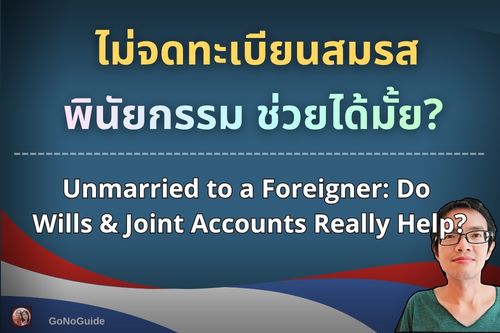
ไม่จดทะเบียนสมรสกับต่างชาติ “พินัยกรรม-บัญชีร่วม” ช่วยได้จริงไหม?
สำหรับคู่รักต่างชาติที่ไม่ได้จดทะเบียนสมรสตามกฎหมาย หากวันหนึ่งฝ่ายใดฝ่ายหนึ่งเสียชีวิตขึ้นมา จะไม่มีสิทธิ์ในมรดกในฐานะทายาทเลย ทรัพย์สินทั้งหมดจะถูกจัดการตามกฎหมาย ซึ่งคู่ชีวิตอาจไม่ได้อะไรเลย
หลายคู่จึงเลือกวางแผนล่วงหน้าด้วยการทำ “พินัยกรรม” หรือ “เปิดบัญชีร่วม” แม้จะช่วยได้ในระดับหนึ่ง แต่บอกเลยว่ายังมีข้อจำกัดอยู่มาก โดยเฉพาะหากมีทรัพย์สินอยู่ต่างประเทศ เช่น เงินบำนาญ หุ้น หรือบ้าน เพราะต้องผ่านกระบวนการพิสูจน์สิทธิ และอาจเสี่ยงต่อการฟ้องร้องจากญาติๆ ของเขาได้
⬩➤ พินัยกรรมช่วยได้ แต่ไม่ใช่หลักประกัน 100% ▼
หลายคนคิดว่าแค่มีพินัยกรรมยกทรัพย์สินให้ก็หมดห่วงแล้ว แต่ความจริงยังมีเรื่องที่ต้องระวัง ดังนี้ครับ
- พินัยกรรมเปลี่ยนได้ตลอดเวลา: ตราบใดที่เขายังมีชีวิตอยู่ วันนี้เขาเขียนยกให้เรา แต่วันหน้าเขาจะแอบไปยกเลิก แก้ไข หรือทำฉบับใหม่ยกให้คนอื่นเมื่อไหร่ก็ได้
- ไม่ได้โอนทรัพย์สินให้ทันที: เมื่อเขาเสียชีวิตลง ธนาคารหรือหน่วยงานต่างๆ จะระงับการทำธุรกรรมทันที ไม่ใช่ว่าเงินจะเด้งเข้าบัญชีเราเลย เราต้องไปดำเนินเรื่องพิสูจน์สิทธิตามกฎหมายก่อน ยิ่งถ้าทรัพย์สินอยู่ต่างประเทศ ยิ่งต้องประสานงานผ่านสถานทูตและทำตามกฎหมายของประเทศนั้นๆ ซึ่งซับซ้อนมาก
ระวัง! ญาติฟ้องคัดค้านได้ แม้เราจะมีพินัยกรรมในมือ แต่ญาติๆ ฝั่งเขาก็มีสิทธิ์โต้แย้งและฟ้องร้องได้ เช่น อ้างว่าพินัยกรรมเป็นของปลอม, ตอนทำไม่มีสติสัมปชัญญะสมบูรณ์ หรือถูกบังคับข่มขู่ให้ทำ
⬩➤ เปิด “บัญชีร่วม” ช่วยได้ไหม? ▼
การเปิดบัญชีร่วมแบบที่ “ใครคนใดคนหนึ่งสามารถถอนเงินได้” อาจช่วยให้คู่ชีวิตกดเงินมาใช้จ่ายได้สะดวกขึ้นในยามฉุกเฉิน
แต่ก็มีข้อจำกัดร้ายแรงเช่นกัน: เพราะถ้าธนาคารทราบเรื่องการเสียชีวิตเมื่อไหร่ ธนาคารอาจสั่งระงับบัญชีร่วมนั้นทันที เพื่อรอการพิสูจน์สิทธิและดำเนินการตามขั้นตอนกฎหมาย ดังนั้น บัญชีร่วมจึงไม่ใช่ทางออกที่ปลอดภัย 100% ในทุกกรณี
วิดีโอ: ไม่จดทะเบียนสมรสกับต่างชาติ “พินัยกรรม-บัญชีร่วม” ช่วยได้จริงไหม?
📑 การขอถิ่นที่อยู่ถาวรในไทย (Thai Permanent Residence) ยากไหม? ต้องเตรียมตัวอย่างไร?
Unmarried to a Foreigner: Do Wills & Joint Accounts Really Help?
For couples who are not legally married, if one partner passes away, the other has no legal right to the inheritance. All assets will be handled by law, meaning the unmarried partner might get nothing at all.
Many couples try to plan ahead by making a “Will” or opening a “Joint Bank Account.” While this can help to some extent, it still has many limits—especially for overseas assets like pensions, stocks, or houses. You will face a lot of paperwork to prove your rights, and there is always a risk of fights with their relatives.
⬩➤ A Will Helps, But It is Not a 100% Guarantee ▼
Many people think that having a Will means everything is safe. But here is the reality you need to know:
- A Will can be changed anytime: As long as your partner is alive, they can secretly cancel, edit, or write a new Will to give everything to someone else at any moment.
- Assets are not transferred instantly: When they pass away, banks and authorities will freeze all transactions immediately. Money will not just jump into your account. You must go through legal steps to prove your rights. If the assets are abroad, you will have to deal with embassies and foreign laws, which is highly complicated.
Important Note: Relatives Can Fight It Even if you hold the Will, their relatives can still challenge it in court. They might claim that the Will is fake, that your partner was not mentally sound when signing it, or that they were forced to do it.
⬩➤ Can a “Joint Account” Help?▼
Opening a joint bank account where “either person can sign and withdraw money” can make it easier for you to get cash for emergencies.
But there is a major catch: The moment the bank finds out that one owner has passed away, they may freeze the joint account immediately to wait for legal checks. Therefore, a joint account is not a 100% safe solution for every case.
Video: Unmarried to a Foreigner: Do Wills & Joint Accounts Really Help?
All videos are in Thai. English audio is available on YouTube (bottom right) → ⚙️ Settings → Audio track → English
📑 How can a foreigner with a Thai wife start the process of moving to Thailand?
📑 What Thai Wives of Foreign Retirees Must Know: Securing Your Rights