
❰ วีซ่าไทย (Thai Visa) ❰ วีซ่าคู่สมรส-วีซ่าเกษียณ (Family-Retirement Visa)
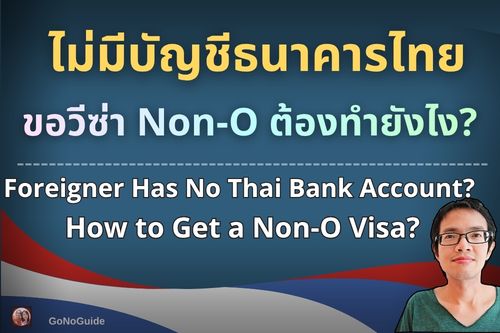
สามียังไม่มีบัญชีธนาคารไทย แต่อยากขอวีซ่า Non-O ต้องทำยังไง?
สำหรับคู่รักต่างชาติที่กำลังวางแผนขอวีซ่าแต่งงาน (Non-O) แต่เจอปัญหาว่า “สามียังไม่มีบัญชีธนาคารในไทย” ไม่ต้องกังวลไป!
สูตรสำเร็จที่แนะนำคือ: ขอวีซ่า Non-O (90 วัน) จากต่างประเทศให้เรียบร้อยก่อน ➝ เดินทางเข้าไทย ➝ นำวีซ่านั้นไปเปิดบัญชีธนาคารไทย เพื่อเตรียมเงินฝากไว้ต่ออายุวีซ่าเป็น 1 ปี
⚠️ ข้อควรระวัง: อย่าเพิ่งบินมาเมืองไทยตัวเปล่าโดยไม่มีวีซ่า Non-O เพราะคุณจะเปิดบัญชีธนาคารไทยได้ยากมาก และอาจทำให้แผนทุกอย่างสะดุดได้
สเตปที่ 1: การขอวีซ่า Non-O (เลือกทำได้ 2 วิธี)
⬩➤ วิธีที่ 1: ยื่นเรื่องจากต่างประเทศ (วิธีนี้ง่ายและสะดวกที่สุด 👍) ▼
ถ้าตอนนี้สามียังอยู่ต่างประเทศ ให้ยื่นขอวีซ่าออนไลน์ผ่านเว็บไซต์ Thaievisa กับสถานทูตไทยในประเทศที่เขาพำนักอยู่ได้เลย
ข้อดี: ใช้เอกสารเป็นภาษาท้องถิ่นของประเทศนั้นๆ ได้ และใช้บัญชีธนาคารต่างประเทศยื่นโชว์หลักฐานการเงินได้เลย
ระยะเวลา: รอผลประมาณ 10–21 วัน (ถ้าเอกสารขาด สถานทูตมักจะให้ส่งเพิ่มทีหลังได้)
⬩➤ วิธีที่ 2: บินไปยื่นที่ประเทศเพื่อนบ้าน (กรณีตัวอยู่ไทยแล้ว) ▼
ถ้าสามีเดินทางเข้าไทยมาแล้ว แต่อยากเปลี่ยนเป็นวีซ่า NON-O โดยไม่อยากบินกลับประเทศตัวเอง สามารถเลือกเดินทางไปยื่นขอที่ประเทศเพื่อนบ้านได้ เช่น ลาว, เวียดนาม, มาเลเซีย หรือฟิลิปปินส์
เงื่อนไขสำคัญ: สามีต้องเดินทางออกนอกประเทศไทยจริง เพื่อให้มีตราประทับเข้าเมืองของประเทศนั้น แล้วจึงสแกนอัปโหลดเข้าระบบ e-Visa
ข้อควรระวัง: เอกสารประกอบการยื่นทุกอย่าง ต้องเป็นภาษาอังกฤษหรือภาษาไทยเท่านั้น
⬩➤ สเตปที่ 2: ได้วีซ่าแล้ว บินเข้าไทย และ “รีบเปิดบัญชีภายในเดือนแรก” ▼
เมื่อได้วีซ่า NON-O และเดินทางเข้าไทยเรียบร้อยแล้ว เป้าหมายต่อไปคือการขออยู่ต่อระยะยาว 1 ปี ซึ่งเงื่อนไขคือต้องมีเงินฝากในบัญชีธนาคารไทยตามที่กำหนด และต้องฝากแช่ไว้ในบัญชีอย่างน้อย 2 เดือน
ดังนั้น ห้ามชะล่าใจเด็ดขาด! ต้องรีบไปเปิดบัญชีธนาคารและฝากเงินทันทีภายในเดือนแรก ไม่งั้นเวลาจะไม่พอและอาจต่อวีซ่าไม่ทัน
⬩➤ สเตปที่ 3: เตรียมเอกสารไปเปิดบัญชีธนาคารไทย ▼
โดยทั่วไป ธนาคารในไทยจะขอเอกสารหลักๆ 3 อย่าง ดังนี้:
- พาสปอร์ต (Passport) ของสามี
- วีซ่า NON-O ที่เพิ่งได้มา
- เอกสารแสดงที่อยู่/ความสัมพันธ์ (แตกต่างกันไปตามเงื่อนไขของแต่ละธนาคาร) เช่น:
- ทะเบียนสมรส
- ทะเบียนบ้านเล่มเหลือง หรือ หนังสือรับแจ้งที่พักอาศัยจาก ตม. (ต้องทำเรื่องแจ้งที่พัก ตม.30 ให้เรียบร้อยก่อน แล้วไปขอหนังสือรับรองที่ ตม.)
💡 Tip: ธนาคารเดียวกัน แต่คนละสาขา ก็อาจจะขอเอกสารไม่เหมือนกัน แนะนำให้โทรสอบถามหรือเดินเข้าไปปรึกษาสาขาที่เราเล็งไว้ล่วงหน้าก่อนวันไปเปิดบัญชีจริง จะชัวร์ที่สุด!
วิดีโอ: สามียังไม่มีบัญชีธนาคารไทย แต่อยากขอวีซ่า Non-O ต้องทำยังไง?
Foreigner Has No Thai Bank Account? How to Get a Non-O Visa?
If a foreigner is planning to apply for a Thai Non-O Visa but does not have a Thai bank account yet, don’t worry!
Here is the recommended formula: Get a 90-day Non-O Visa from abroad first ➝ Enter Thailand ➝ Use that visa to open a Thai bank account ➝ Deposit the money to prepare for the 1-year visa extension.
⚠️ Important Note: Do not just travel to Thailand without a Non-O visa hoping to fix everything here. Without a Non-O visa, it is very difficult for a foreigner to open a Thai bank account, which can ruin the whole plan.
Step 1: Apply for the Non-O Visa (Choose 1 of 2 Ways)
⬩➤ Option 1: Apply from the home country (Easiest & Most Recommended 👍) ▼
If the foreigner is still abroad, apply online through the official Thaievisa website with the Royal Thai Embassy or Consulate in their current country.
Pros: You can use documents in the local language and show foreign bank statements as financial proof.
Processing Time: Usually takes about 10–21 days (if any documents are missing, the embassy will usually let you submit them later).
⬩➤ Option 2: Apply in a neighboring country (If already in Thailand) ▼
If the foreigner is already in Thailand and wants to get a Non-O visa without flying all the way back home, they can visit a nearby country like Laos, Vietnam, Malaysia, or the Philippines.
Important Rule: The foreigner must actually leave Thailand and enter that country to get an immigration stamp. This stamp must be scanned and uploaded into the e-Visa system.
Warning: All supporting documents must be in English or Thai only.
⬩➤ Step 2: Enter Thailand and “Open a Bank Account in the 1st Month”▼
Once the foreigner gets the Non-O visa and arrives in Thailand, the next goal is the 1-year visa extension. The rules state that the required amount of money must stay in the Thai bank account for at least 2 months before applying.
Therefore, do not wait! The foreigner must open the bank account and deposit the money within the first month, or they won’t have enough time and will miss the deadline.
⬩➤ Step 3: Documents Needed to Open a Thai Bank Account▼
Generally, Thai banks will ask for these 3 main things:
- The Foreigner’s Passport
- The Non-O Visa just received
- Proof of Address or Relationship (this depends on the bank’s rules), such as:
- Marriage Certificate (for marriage visas)
- Yellow House Registration Book OR a Residence Certificate from Immigration (you must file the TM.30 form first, then request this certificate at the Immigration office).
💡 Tip: Different branches of the exact same bank can have different rules. It is best to call or visit the specific branch you plan to use beforehand to ask exactly what they need!
Video
Foreigner Has No Thai Bank Account? How to Get a Non-O Visa? (English Audio)
⬩➤ English Transcript▼
0:00 My husband still doesn’t have a Thai bank account. What should we do if we want to apply for a Non-Immigrant O visa? To put it simply, you must apply for the Non-Immigrant O visa from abroad; it cannot be done in Thailand before entry. Once you obtain the Non-Immigrant O visa, you can then open a Thai bank account. So, is this referring to the Non-Immigrant O visa?
0:21 The Non-Immigrant O visa has several categories, but the most commonly discussed one is for spouses of Thai nationals, particularly those with a registered marriage. We refer to them as husbands or wives. Both categories follow the same general rules.
0:34 Therefore, you must first apply for the Non-Immigrant O visa from abroad. Once approved, you enter Thailand and present the visa to open a Thai bank account, as this cannot be done within the country. In other words, the Non-Immigrant O visa application must be completed outside of Thailand.
0:49 That concludes the summary. Okay, so foreigners who move their entire household to Thailand without prior arrangements, arriving solely on a visa exemption, and then attempting to handle everything locally, will face significant issues.
1:04 Without a bank account, you cannot apply for an extension. This is because the Non-Immigrant O visa issued by the embassy provides an initial 90-day stay. Within this 90-day period, you must promptly open a Thai bank account to proceed with your extension application.
1:19 You must deposit two months’ rent in advance. If you cannot open a bank account, you cannot extend your stay. Subsequently, you will be advised to seek accommodation abroad. Therefore, let’s review this once more.
1:38 This depends on your husband’s current location: whether he is abroad, at his residence, or in Thailand—the process differs accordingly. If he is abroad, we’ll address that scenario first.
1:53 When abroad, both scenarios require a joint online application—I must stress this: both applicants must apply online together. However, if you are residing at your own home abroad…
2:05 Submit your application online through the Thai embassy in your country using the official Thai e-Visa portal. Simply search for ‘Thai e-Visa’, access the site, complete the application form, and upload the required documents.
2:22 After paying the visa fee, processing typically takes ten to twenty-one days. The approved visa will be emailed to you, so kindly allow sufficient time. A key benefit of applying from your home country is that you may submit all supporting documents in your native language, irrespective of your current location.
2:40 Whether you are in Spain (Spanish) or Sweden (Swedish), you can use your home country’s bank account. This applies during the initial 90-day period of the online visa application.
2:55 According to the embassy’s guidelines, you may use your home country’s bank account while abroad. However, once you enter Thailand, you must use a Thai bank account.
3:08 Therefore, this step is relatively straightforward since you likely won’t need to do much. All necessary documents and your bank account are already in place.
3:17 It’s also quite easy. For instance, some people simply submit a single-page summary to the embassy. However, this method is not valid if you apply while inside Thailand.
3:28 The alternative requires far more effort. The online method is much simpler—you don’t even need to travel; you can just apply from home. That’s why Aoff recommends applying for the visa online before entering Thailand.
3:42 Off, this is a phrase I’ve said so often people get tired of hearing it. But honestly, I’m not bored—once someone gets the visa and leaves, it’s done. It’s like something you only do once in your life, right?
3:55 Then there are always new applicants, which means I keep repeating myself. And this advice applies when you’re still in your home country. So, I suggest handling everything in advance and using documents in your native language.
4:08 That covers it. Sometimes applicants don’t know what to do, submit unclear photos, and so on—the embassy may just ask for additional documents later. But this is just a general overview. Everything covered here includes the online application process and all related topics.
4:22 If you have any questions, check the GoNoGuide website—it provides detailed information on each topic. This is just a general summary. Earlier, we were talking about being in your home country, but now, if you’re already in Thailand…
4:35 As I said, no action was taken. They arrived in Thailand on a visa-free entry and tried to handle everything, but it didn’t work. Since the process is actually straightforward, there’s no need to return to your home country, right?
4:49 You can apply at a neighboring country, but only neighboring countries allow such applications, as visa rules normally require applying in your own country.
5:00 All neighboring countries work—Laos, Vietnam, Malaysia, the Philippines, and Indonesia, depending on circumstances. However, they differ. Most people tend to go to Laos, for reasons unknown, perhaps due to familiarity.
5:16 However, for other countries, we’ll focus only on Laos here. For instance, with Vietnam, you typically need to apply for a visa before entering. Malaysia may not require one, but you must remain there until the visa is granted.
5:33 Similar rules apply: for the Philippines and Indonesia, you must remain there continuously.
5:39 However, you can enter first—I’ll explain shortly why entry is required beforehand. Regarding Laos, once the process is complete, you may return, provided…
5:51 The free visa is still available. This reflects Laos’ flexible policy: we must travel to a neighboring country to apply, not simply stay in Thailand.
6:03 You cannot simply finish here and click to select a neighboring country to apply. You must physically travel there; sitting in Thailand and clicking won’t work.
6:10 It’s more cumbersome because we must take their country’s entry stamp and upload it to the Thai e-visa system. Whether applying directly or via a neighboring country, the process is online: you must upload the physical entry stamp.
6:25 So don’t submit yet; you can fill it out now or do it there. If you fill it out now, even a day trip works, because once completed, you only need to upload the documents.
6:36 Correct? So, regarding the Laos example I mentioned: as soon as you enter Laos, get the entry stamp. While most cases require a visa, you can obtain it right at the border.
6:46 Right now, this is how it works. I’m not sure if they’ll change soon. At the border checkpoint, after completing the process, you need to photograph both your entry stamp and your visa, then upload these images to the Thai e-visa system.
6:59 After that, proceed to pay at the Royal Thai Embassy in Laos. They have two branches: one in Vientiane and one in Savannakhet. Most people choose Vientiane. Once the payment is complete, you’re all set and can head back.
7:13 If you still have your free visa allowance, great. But if it’s exhausted, you must wait there. That’s why he kept emphasizing over and over: when applying through your own country…
7:26 You can use documents from your own country, correct? However, for neighboring countries like Laos, or others, all documents must be in English. Therefore, if your marriage certificate isn’t in English, you must get it translated.
7:42 However, this document doesn’t need authentication yet since we’re applying through the embassy. If doing this in Thailand, you’d need to authenticate the original document and then the translation—that’s three steps total. For now, just translating is enough.
7:53 Uh, regarding translation into English: all non-English documents must be in English—bank accounts, marriage certificates, and house registration. This means a Thai house registration is acceptable.
8:06 I’ll cover that in more detail later, so I won’t go into specifics. Just keep in mind that all documents must be in either English or Thai. Everything required will be listed here. If you don’t have them, you must get them before entering.
8:19 Otherwise, it becomes a hassle as usual. The process takes around seven to ten days, and the visa is emailed to you. Once received, you return to Thailand with the visa. Now, we’re moving to the final step—I won’t walk through the entire process.
8:35 I’m only touching on opening an account. The final step is opening a Thai bank account. This is because you must apply for an O visa from abroad, as per the new government policy.
8:51 The year referenced earlier aims to prevent scams. As a result, free visa applications are no longer accepted. In the past, some individuals might have succeeded, particularly those who already possessed a previously unused Thai bank account, as it was feasible back then.
9:07 However, that is no longer sufficient; you must present a NOLO to open an account, along with other supporting documents—not just the NOLO alone. Therefore, you need to be aware that you will require a passport, a visa, the NOLO, and finally, a third document.
9:21 This varies from bank to bank, so it’s best to inquire beforehand. Banks typically require official government documents. For spouses, many banks accept a Thai marriage registration certificate.
9:42 If it is a foreign marriage certificate, you must check with the bank. It may require translation and legalization. They might request two copies, meaning you need to have the original translated and certified, as well as certify the translation itself. Regarding retirement…
9:58 If they do not accept the marriage certificate, they will require alternative proof of address issued by the government. This could be the House Registration Book (Tabien Baan), or a Residence Notification Letter obtained from the Immigration Office by submitting Form TM.30.
10:12 Therefore, the third document is the one you must confirm with the bank. However, the example I provided was based on information from ‘Green Bank’.
10:18 So if it’s a spouse, they need the marriage certificate, whether from Thailand or abroad. But if it’s for retirement, they need an official address document as previously mentioned.
10:31 Now, even within the same bank, requirements might differ. So if you’re looking for recommendations, some branches are stricter than others.
10:42 So, we have options, right? We can choose where to open an account. We have choices—where should we go? Which bank should we use? For example, suppose we pick Bank A.
10:48 Then, suppose we choose Blue Bank. Wow, Blue Bank is extremely strict! But if you still want to go with Blue Bank, try checking with another Blue Bank branch to see if their requirements are the same. If…
10:58 If Blue Bank is strict across all branches, perhaps consider another option—like Green Bank. Okay, if you’ve already asked multiple times, or others suggest different banks, then Green Bank works. Yes, you’ve asked enough times already.
11:06 Some might suggest colors like purple or blue, which is also acceptable. However, it is absolutely required. For the third point, there are preparations needed beforehand: obtaining the visa before returning to Thailand.
11:20 You must open an account within the first month since funds need to be deposited for two months. Therefore, if you haven’t opened one by then, it’s too late. Waiting until after the first month to deposit will also miss the deadline, rendering all previous visa efforts futile. That’s what I’m sharing today. If anyone needs more details on specific topics,
11:30 Visit the website and search the yellow highlighted section for any questions you have. Alternatively, check the GONOGUIDE website. You can find this info on the screen, in my profile, or via the link Off has posted below the video.
11:41 If you have any questions, please post them in the comments on Ban Daeng’s page. I’ll make sure to see them. Thank you for tuning in today.
11:54 If you have any questions, feel free to ask in the comments on Ban Daeng’s page—Off will see them right away. Thanks for tuning in today!
All videos are in Thai. English audio is available on YouTube (bottom right) → ⚙️ Settings → Audio track → English
📑 Which visa type is required to open a bank account in Thailand?